Politics & Leadership
A Coloniser Called Jakarta
On Thursday, 10 September 2026, officials from the six provinces of the Land of Papua sat in a meeting room at the Ministry of Home Affairs. The agenda sounded technical: aligning perceptions on the definition of Indigenous Papuans (Orang Asli Papua, OAP).
After more than half a century of governing Papua, Jakarta apparently only now felt the need to hold a meeting to find out whom it governs.
The next act is worth watching over a cup of coffee. Human Rights Minister Natalius Pigai firmly objected. "The state must not create a definition of an ethnic group, a nation, a race, or a class," he said, recalling the history of slavery and apartheid. Deputy Home Affairs Minister Ribka Haluk then called reports of the plan a hoax. Three days later, at the House of Representatives, Home Affairs Minister Tito Karnavian instead explained the reasons for the plan. A hoax with a meeting, with reasons, and with a minister explaining it in parliament. The most diligent hoax I have ever known.
Pigai then backed down. "So it's clear," he said. He came as an objector and left as an interpreter. According to Pigai, the misperception lay only in the word "definition"; what was meant was clarifying the recipients of Special Autonomy funds. Same content, politer packaging. Jakarta is indeed skilled at changing words. Clearing customary forests is called a national strategic project. Now regulating the identity of a nation is called aligning perceptions.
Yet the definition has existed since 2001. The Special Autonomy Law states that Indigenous Papuans are people of the Melanesian racial stock consisting of the indigenous tribes of Papua and/or people accepted and recognised as Indigenous Papuans by Papuan customary communities. The 2021 revision kept that wording almost word for word. In 2024, the Constitutional Court rejected a petition to narrow it. There are two doors there, descent and recognition, and the key to the second door is held by customary communities.
So what is there to align? Tito answered it himself. Special autonomy funds now amount to 2.5 percent of the national General Allocation Fund and are only for OAP, while the definitions differ. "OAP in what agreed sense?" he asked. For half a century, when Papuans were shot, driven from their forests, or jailed for a single flag, Jakarta never bothered to ask who they were. The question only arose when there was money to be divided. The identity of a nation that has lived for thousands of years on its land is to be tidied up to fit the budget recipients' column.
Tito also said the differing definitions occur within Papua itself. That is true. Papuans do debate it: must both father and mother be Papuan, is one enough, or does it include a child adopted under custom? Some have even taken it to the Constitutional Court. Jakarta calls that debate a problem. I call it autonomy. Every family has the right to debate who its members are. What is strange is the neighbour who turns up carrying a rubber stamp.
The stakes are not small either. The definition of OAP determines who may become governor and deputy governor in the Land of Papua, who sits in the Papuan People's Assembly, who enters affirmative civil service quotas, and who is entitled to special autonomy funds. Whoever holds the definition holds the gate of power in Papua. Today the definition is said to filter fund recipients. Who guarantees that tomorrow it will not be used to filter out leadership candidates Jakarta dislikes?
Rulers have always loved defining the people they rule. The Dutch East Indies colonial government divided the population into Europeans, Foreign Orientals, and Natives, and that division determined each person's law and rights. In 1921 the United States defined Native Hawaiians as those with at least 50 percent Hawaiian blood, even though Prince Kūhiō, who championed the law, wanted a far lower threshold. As a result, every mixed marriage shrank the number of Hawaiians in the eyes of the state, and a century later the rule is still being challenged. Definitions made by rulers have one tendency: they narrow. Through definition, a nation can be reduced without a single bullet.
For Papua, that narrowing is not theory. Civil registry (Dukcapil) data records some 2.3 million OAP who have registered for electronic ID cards, and that figure has already sparked anxiety that Papuans are becoming a minority in their own land. The Deputy Home Affairs Minister admitted one obstacle: some Papuans are reluctant to be registered for fear of being spied on. A nation afraid of being registered by its own state is now to be defined by that same state. A sane state would ask why its citizens are afraid. Jakarta instead answers that fear with a form.
Compare this with countries that respect indigenous peoples. In Nunavut, Canada, Inuit community committees determine who is Inuk, on the principle that Inuit are best able to decide. In Norway, the electoral roll of the Sámi Parliament is compiled by the Sámi Parliament. In Malaysia, the federal constitution once listed 28 native groups of Sarawak and sidelined children of mixed marriages. The solution was not to pull authority to Kuala Lumpur, but a 2021 amendment allowing Sarawak to define its own natives. Indonesia also voted for the UN Declaration on the Rights of Indigenous Peoples in 2007, whose Article 33 guarantees indigenous peoples' right to determine their own identity. Jakarta raised its hand in New York, then forgot at Medan Merdeka Utara.
Papua's voice is clear. In Nabire, on 23 November, the Chair of the Association of Governors of the Land of Papua, Meki Nawipa, stressed that the definition of who is an Indigenous Papuan must not be determined by outsiders, but must be formulated by Papuans themselves.
If this plan stood alone, it might still be forgiven as bureaucratic carelessness. But it does not stand alone. Papua's gold mountain was contracted to Freeport in 1967, two years before its people were asked through the Act of Free Choice (Pepera). In Merauke, 486,939 hectares of forest area were released for a national strategic project, even though the Wambon Kenemopte clans had been petitioning for recognition of their customary forest since 2023. Three new provinces were enacted without the consideration of the Papuan People's Assembly. Flags are criminalised as treason, and more than a hundred thousand people have been displaced by conflict in their own land. Gold, forests, maps, and voices are already arranged from Jakarta. All that remains is the name. Now even the name is to be managed.
That is the final link in the chain of colonisation: after the land and wealth are seized, the ruler decides who the natives are. This is not administrative mismanagement. It is neatly organised oppression, except that the flag is red and white and the office is in Jakarta. The old colonisers came with ships and cannons. Today's coloniser need only come with a meeting invitation, an attendance list, and a draft definition.
Who Papuans are has never been answered in a meeting room. It is answered by the mama who names her child's clan, by the tete who points to the boundary of customary land, by the village that accepts someone as part of itself. So let history record Jakarta by the name it deserves: oppressor of the Papuan nation, which colonises and then calls it administration.
Cite this essay
Dumupa, Y. (2026, 26 November). A Coloniser Called Jakarta. yakobusdumupa.com. Retrieved 26 November 2026, from https://yakobusdumupa.com/catatan/penjajah-bernama-jakarta
About the Author
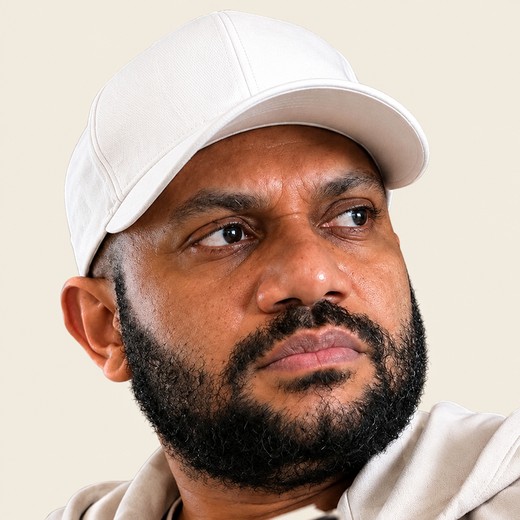
Yakobus Dumupa
Writer, organic intellectual and activist from the Land of Papua, with an educational background in political science, government and anthropology. He served as a member of the Papuan People's Assembly (2012–2016) and as Regent of Dogiyai (2017–2022), and has written dozens of books and hundreds of articles.
Read biographyReaders’ Responses