Politics & Leadership
Gibran: Fruit Forced to Ripen
On Thursday, 12 November 2026, at 11:16 a.m. Western Indonesian Time, Gibran Rakabuming Raka arrived at the Parliament Complex in Senayan. He did not speak to reporters. He met with the leaders of the People’s Consultative Assembly (MPR) for about twenty minutes, then handed a letter to its Speaker, Ahmad Muzani. Its message was brief: he was stepping down as vice president “at his own request.” That same afternoon, the House of Representatives (DPR) cancelled a plenary session at which it had been due to announce a motion to exercise its right to state an opinion on the controversy over his diploma.
There was no explosion. No open resistance. Just a letter and a door softly closed.
In his farewell video, Gibran insisted he was not resigning over the diploma case, and said the vice presidency was merely a trust placed in him. At Merdeka Palace, President Prabowo Subianto offered an explanation that did not quite match: Gibran stepped down because he was deemed not to have met the constitutional requirements. I do not want to guess which was more honest. But for anyone who has followed Gibran’s journey since 2023, the ending did not come as much of a surprise.
In our markets there is such a thing as carbide-ripened fruit. It is picked too early, then forced to ripen with calcium carbide. Overnight its skin turns yellow and it looks ready to sell. But inside, the flesh is not truly ripe, and the fruit rots sooner than one that ripens on the tree. Gibran’s political journey reminds me of that kind of fruit.
Remember how he was picked. In October 2023, the Constitutional Court, through Decision No. 90, changed the age requirement for presidential and vice-presidential candidates just as nominations were under way. The court’s chief justice at the time, Anwar Usman, was Gibran’s own uncle. Gibran was 36 and had served as mayor of Surakarta for only about two and a half years. In the language of the market, the fruit was picked while it was still green. The court’s Ethics Council later found Anwar guilty of a serious ethics violation and removed him as chief justice. Not long afterwards, the General Elections Commission (KPU) accepted Gibran’s registration before revising its regulation on the age requirement. The Election Organisers’ Ethics Council (DKPP) issued a final stern warning to KPU Chair Hasyim Asy’ari.
Two ethics violations at two institutions charged with safeguarding elections, all for one candidacy. Yet the result was still declared valid, because ethics was treated as a separate matter and the legal questions as settled. So the fruit went on display, its skin glossy and yellow, and people were asked to believe it was ripe inside.
Two years later, the carbide lost its effect.
The legal challenge over the diploma, once dismissed as trivial, slowly found its way forward. His educational records could only be accessed after a public information dispute was decided in March 2026. On 6 October 2026, after hearing from the Ministry of Primary and Secondary Education and the education attachés in Singapore and Australia, the Constitutional Court said it had found no convincing evidence that Gibran held a foreign qualification equivalent to an Indonesian senior high school diploma. Three weeks later, the Supreme Court, in ruling 742 K/TUN/2026, declared Gibran’s certificate of educational equivalency invalid and void by operation of law. There was talk of continuing the court fight and seeking a judicial review. But Coordinating Minister Yusril Ihza Mahendra pointed out that the Constitutional Court ruling was final and binding, and that no party could seek a review of the Supreme Court ruling. The ministry revoked the certificate on 11 November. The next day, Gibran resigned.
There is a symmetry here that is hard to ignore. Gibran rose through a court ruling, and he fell through one too. The difference was the direction. The law was once bent to let him through. Now it was straightened, and the road once forced open closed again. People call it karma. The Javanese have a quieter expression: ngunduh wohing pakarti, everyone reaps the fruit of their own actions.
And what about Jokowi?
He described his son’s resignation as part of the ordinary course of politics. Perhaps that is how a father preserves his dignity. But the public knows that what happened was not ordinary. This was the first time since the Reformasi era began that a vice president stepped down mid-term under scrutiny over whether he had met the requirements to run.
I will not say that Jokowi’s dynasty has collapsed. Bobby Nasution is still governor of North Sumatra, and Kaesang Pangarep still leads the Indonesian Solidarity Party (PSI). But the crown of that project fell at its peak, and the way it fell left a costly lesson. Power built on aji mumpung, making the most of an opportunity while in office, can indeed grow quickly. It just has no roots. For that project, Jokowi, Gibran and Bobby were also willing to be uprooted from the Indonesian Democratic Party of Struggle (PDI-P), the party that had raised them, until they were finally expelled.
Some observers even read Gibran’s fall as part of a reshuffling of power around Prabowo. Gibran himself said he had consulted extensively with the president before making up his mind. If that reading is right, the lesson is more bitter still: the fruit once picked to serve political interests has now been set aside to serve political interests too.
But it would be too easy to lay all the blame on one family.
Carbide-ripened fruit does not ripen itself. Someone picks it too early, someone sprinkles the carbide, and someone puts it on display while pretending not to know. There was a judge who did not recuse himself from his nephew’s case. There were election officials who rushed to accept the paperwork. There were parties that backed the candidacy without asking many questions. And some of us chose to keep quiet because we felt it had all been done legally.
The country has paid a considerable price. For two years, the vice presidency was held by someone whose educational qualifications later could not be established in court. Now the MPR must prepare a session to elect a successor, while public trust in state institutions has already been damaged. The law did eventually do its work, but it came late, and delay has a cost of its own.
I hope the lesson does not end with Gibran. Anyone tempted in future to pick power before its time for a child, an in-law or a crony should remember that carbide can fool the eye, but it cannot fool time.
Fruit that ripens on the tree does take longer. It grows slowly, season after season, and does not always look appealing on display. But when it is picked, it is sound right through. Fruit forced to ripen looks good only on the surface, then rots before anyone can enjoy it.
Gibran has shown us that. Let us hope we do not have to wait for the next carbide-ripened fruit to learn the same lesson.
Cite this essay
Dumupa, Y. (2026, 20 November). Gibran: Fruit Forced to Ripen. yakobusdumupa.com. Retrieved 20 November 2026, from https://yakobusdumupa.com/catatan/gibran-buah-yang-dipaksa-masak
About the Author
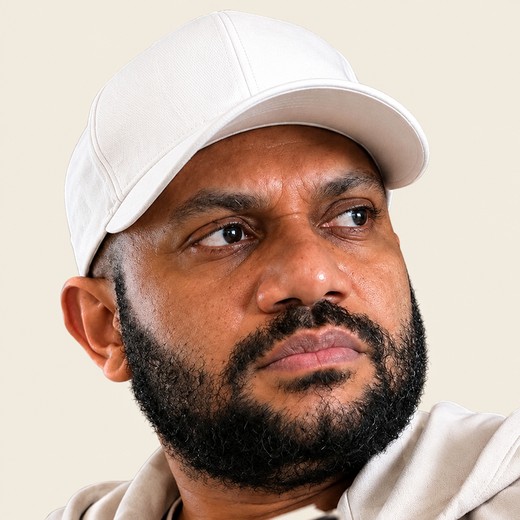
Yakobus Dumupa
Writer, organic intellectual and activist from the Land of Papua, with an educational background in political science, government and anthropology. He served as a member of the Papuan People's Assembly (2012–2016) and as Regent of Dogiyai (2017–2022), and has written dozens of books and hundreds of articles.
Read biographyReaders’ Responses