Politics & Leadership
Accuse of Treason, Reap Treason
On Monday evening, 23 November 2026, the lobby of the Criminal Investigation Agency (Bareskrim) of the National Police suddenly looked like a stall of confiscated goods. Laid out on the tables were 39 electronic devices, a pile of black T-shirts, Rp735 million in cash, and twenty One Piece pirate flags. In front of these items, the Head of Bareskrim, Commissioner General Asep Safrudin, announced six suspects in a case of treason (makar).
The first name: General Listyo Sigit Prabowo. Former Chief of the National Police.
The other five are not parking attendants either. There is Inspector General Slamet Uliandi, Head of the Police Information Technology Division. There is Inspector General Ahrie Sonta Nasution, Head of the Police Legal Division. Yes, the head of legal affairs. Then Inspector General Eko Hadi Santoso, Brigadier General Tedjo Kusumo, and Senior Commissioner Iman Imanuddin. All of them police officers. They are suspected of conspiring to deprive the president of his liberty or to overthrow the government, a crime punishable by death.
In the Land of Papua, this news may be greeted with a bitter smile. At last the police are tasting the medicine they have prescribed for Papuans for decades.
For there, makar is the word the police utter most diligently. Raise a flag: makar. Join a demonstration: makar. Deliver a letter to a government office: makar. The police arrest, the prosecutors charge, the judges bring down the gavel. The factory never runs short of orders, and its raw material is always the same: Papuans.
Filep Karma raised the Morning Star flag in Abepura on 1 December 2004. No weapons, no victims. He was sentenced to 15 years in prison for makar and spent eleven years behind bars, almost twice as long as Listyo's tenure as Police Chief. The UN Working Group on Arbitrary Detention declared that his detention violated international standards and found that Indonesian courts had applied the makar article disproportionately. The state listened, and carried on.
In 2019, after Papuan students in Surabaya were jeered at as "monkeys", Amnesty International recorded at least 22 Papuan activists charged with makar within just a few weeks. The man who shouted "monkey" was sentenced to five months. Buchtar Tabuni, who joined the protests against that racism, faced a prosecution demand of 17 years in prison; the judges eventually sentenced him to 11 months, a gap that laid bare how bloated the charge was. In April 2025, four middle-aged men in Sorong delivered a letter to a government office. They were accused of makar, tried far away in Makassar, and sentenced to seven months. Throughout that year, Papuans Behind Bars recorded 291 political arrests in the Land of Papua, 252 of them involving the police.
Listyo himself, while in office, counted the KNPB and the ULMWP, Papuan civil organisations, among the armed criminal groups before Commission III of the House of Representatives. To the Nemangkawi Task Force, he gave the message that troops should convince the people that "we all love Papua". A strange love: it arrives carrying handcuffs and leaves behind the stamp of makar. Now that stamp stands in front of his own name.
Amusingly, when announcing the suspects, the Head of Bareskrim quoted the Criminal Code: makar is the intention to carry out an attack that has been realised through preparation. An attack. Amnesty has long pointed out that "makar" is translated from the Dutch word aanslag, which means a physical attack. So the question is simple: what attack does a piece of cloth launch? What attack does a single letter commit?
Notice, too, the speed. For the generals, the police formed a special team, held case reviews with experts, examined 71 witnesses, and deliberated for three weeks, because, they said, investigating makar "requires thoroughness and time". For Papuans, that thoroughness can be replaced by a single flag.
Compare also the substance. Papuans are charged with makar over cloth, letters and loudspeakers. These generals are suspected of wiretapping the President, ministers and a number of public figures from 2025 to 2026, erasing the electronic traces, and conspiring since before the president-elect was inaugurated. Investigators suspect that Listyo gave the orders and chose the targets. If proven, this is makar in the true sense: not a flag in a field, but the instruments of the state in the hands of people sworn to guard it. They were busy hunting for makar in Papua, while those suspected of planning it sat in Jakarta.
The evidence, too, feels familiar: flags and T-shirts, including 250 T-shirts reading "All Cops Are Bastard". An irony hard to invent: T-shirts insulting the police became evidence in a case against senior police officers. In Papua, the police hunt the Morning Star flag all the way into the villages. Yet the flag displayed as evidence of this year's biggest makar turns out to be a pirate flag.
Nor is makar the only item in the collection. On the same shelf sit a general who sold confiscated crystal meth (Teddy Minahasa), a general charged with overseeing police who masterminded the murder of his aide (Ferdy Sambo), a general who took bribes from a fugitive (Napoleon Bonaparte), a district police chief who raped children, police officers who extorted concertgoers, the tear gas at Kanjuruhan that killed 135 people, and officers involved in online gambling. All of it is recorded in court verdicts, ethics hearings, or the police's own admissions. An institution with a report card like that has long been the most confident judge of who is loyal to the state and who is a traitor.
So who, really, threatens the state?
Nor can the state wash its hands. As soon as the suspects are generals, the state suddenly becomes skilled at deliberation. On 3 November, the Coordinating Minister for Law, Human Rights, Immigration and Corrections, Yusril Ihza Mahendra, said there was no element of makar; the next day, he said there were indications of makar. For Papuans, the state has never bothered to think for that long. In 2015, President Joko Widodo released a number of Papuan political prisoners and called it "only the beginning" of an effort to empty the prisons of political detainees. Ten years later, Papuans Behind Bars still recorded 63 political prisoners serving sentences. That beginning, it seems, never had a sequel.
The elders in the village often say: whoever sows shall reap. For decades the police have sown the makar article in the Land of Papua, watered it with the stigma of separatism, fertilised it with intelligence reports, while the state faithfully provided the soil. It turns out the seed also grew lush in the yard of National Police Headquarters, and those reaping the harvest are its own generals.
Of course, the six suspects have not yet been tried. The presumption of innocence must be respected. I only hope that the same principle will one day apply to Papuans as well, who have so far been sentenced by stigma before they ever had a chance to sit in the defendant's chair.
If the state still has a shred of shame, now is the time to reopen the makar cases against Papuans who only spoke out peacefully, to free the political prisoners, and to return the makar article to its original meaning: a real attack, not flags and letters.
That Monday evening, twenty pirate flags lay neatly folded in the Bareskrim lobby. For years the police searched for enemies of the state in the forests and villages of Papua. Yet the man now suspected of being an enemy of the state once sat in the softest chair, wore four stars, and led the hunt.
So let this be recorded: Papuans are imprisoned for flags; generals get discounts for their rank. In a country like that, the greatest makar has long been under way. What has been overthrown is justice, and the perpetrators wear uniforms.
Cite this essay
Dumupa, Y. (2026, 23 November). Accuse of Treason, Reap Treason. yakobusdumupa.com. Retrieved 24 November 2026, from https://yakobusdumupa.com/catatan/tuduh-makar-tuai-makar
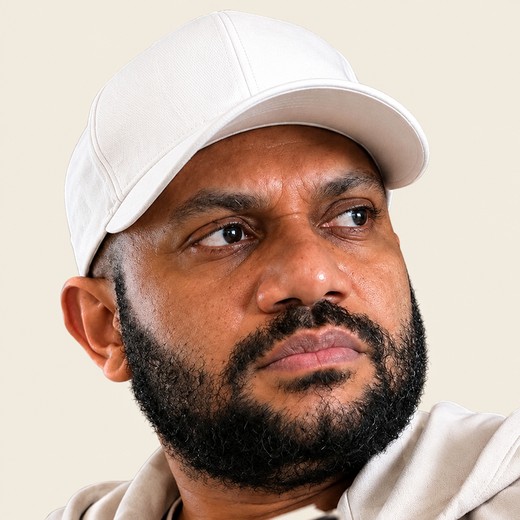
About the Author
Yakobus Dumupa
Writer, organic intellectual and activist from the Land of Papua, with an educational background in political science, government and anthropology. He served as a member of the Papuan People's Assembly (2012–2016) and as Regent of Dogiyai (2017–2022), and has written dozens of books and hundreds of articles.
Read biographyReaders’ Responses