Politics & Leadership
A Flying Horse in the Republic of Eavesdroppers
On Thursday morning, 12 November 2026, before the working meeting between Commission III of the House of Representatives and the National Police Chief began, Commission III member Ahmad Sahroni posed a question that sounded simple. If he was not mistaken, he said, the police owned nearly three hundred wiretapping devices. "Where are those wiretapping devices? I'd like to see them," he said.
The question sounded odd. A people's representative from the very commission tasked with overseeing the police turned out not to know where the state's most dangerous instruments were kept. Yet that is precisely the heart of the matter. This country has hundreds of ears that can listen to anyone's conversations, and almost no one knows exactly where those ears are, who holds them, and for whom they work.
Sahroni's question arose amid a scandal shaking the republic: the alleged wiretapping of President Prabowo Subianto by several police generals, including a former National Police Chief. Those tapped were not only the President but also ministers, politicians, leaders of mass organisations, activists, journalists and businesspeople. The traces were allegedly ordered to be erased last October.
As soon as the news broke, one name immediately took flight in the public sphere: Pegasus.
In Greek mythology, Pegasus is the winged horse born from the blood of Medusa. It is beautiful, swift, and cannot be caught by just anyone. In the real world, Pegasus is spyware made by the Israeli company NSO Group, capable of infiltrating a person's phone without the victim needing to click anything. It can read messages, listen to conversations, even switch on the camera and microphone. The phone's owner never knows that the horse is flying inside their pocket.
I must say honestly: to this day, official police statements do not mention Pegasus in this case. The claim that Pegasus was used to tap the President has circulated mostly through anonymous sources, some of whose stories even shift between Pegasus and Predator, another spyware also linked to Israel. On television, Ade Armando could only ask whether the suspects had access to the tool. A question, not proof.
So why did that name surface so quickly? Because the public has a memory.
In 2023, the IndonesiaLeaks consortium found indications that Pegasus had entered Indonesia since 2018. Through government procurement data, they found that the National Police ordered two "zero-click" intrusion systems in 2017 and 2018 worth a total of around Rp258 billion. Shipping documents showed the goods were sent by Q Cyber Technologies, a Luxembourg-based company linked to NSO Group, and transited through Heathrow Airport, London, before arriving in Indonesia. A year later, Amnesty International together with Tempo and Haaretz found at least four Israel-linked companies selling spyware and surveillance technology to Indonesia between 2017 and 2023, through networks of suppliers and intermediaries in Europe, Singapore and Malaysia.
The police denied it at the time. The Head of the Police ICT Division, Inspector General Slamet Uliandi, insisted that the police had never used Pegasus. The House claimed not to know. The government said Indonesia was not on the customer list. The case then settled into silence, like so many other cases in this country.
Three years later, Slamet Uliandi's name surfaced again. This time as a suspect in the wiretapping of the President.
I do not intend to draw any conclusion from that coincidence. But the public is entitled to feel bitter. The man who once assured us that there were no rogue wiretapping devices within the police is now allegedly part of the chain in one of the most serious wiretapping scandals in the republic's history.
Here, irony piles upon irony.
The first irony concerns Israel. In international forums, our government loudly defends Palestine and condemns Israel's cruelty. We have no diplomatic relations with that country, and this stance is often grounded in the mandate of the constitution. Yet behind closed doors, our security apparatus allegedly bought Israeli-made surveillance technology through roundabout routes. Charles Santiago of the ASEAN Parliamentarians for Human Rights once put it sharply: the height of hypocrisy, condemning Israel in public while secretly using its tactics against one's own citizens.
The second irony concerns Prabowo himself. The 2023 IndonesiaLeaks report stated that Prabowo, then still an opposition figure, was among those allegedly targeted for wiretapping. Now, having become president, he has been tapped again, this time by people from his own circle, using the official wiretapping system of the state he now leads.
Greek mythology has an intriguing ending to the story of Pegasus. The winged horse was once tamed by a hero named Bellerophon. Together with it, Bellerophon won many battles. But when his arrogance peaked and he tried to fly to the summit of Olympus, where the gods dwell, Pegasus threw him down to earth.
Wiretapping devices work in a similar way. They are bought on the grounds of hunting terrorists, drug lords and corruptors. But when no one is watching, these tools can slowly change masters. They can be used to spy on political rivals, gather the weaknesses of allies, and then one day fly to the summit of power and tap the president.
Wiretapping is indeed not merely a matter of technology. It is a way of mining secrets. In the wrong hands, secrets become instruments of pressure: to subdue opponents, bind allies and secure seats. Therein lies the danger to democracy. Citizens who elect their leaders never know that important decisions may be made by those who secretly hold recordings of conversations.
That is why the question raised by Haris Azhar in a dialogue on Metro TV deserves to be repeated loudly: who needs the results of the wiretaps, what are they used for, and who financed the purchase of the devices?
Punishing the suspects is indeed important. But punishing the rider does not tame the horse. As long as these devices remain in a dark room, without a clear inventory, without an open audit and without a law to regulate them, the flying horse will keep looking for a new rider.
The state must open procurement data on all wiretapping devices ever bought, including where they came from and through whose intermediaries. An independent audit must be carried out, not by the institutions that operate them. The Wiretapping Bill, which Commission III is discussing again this month, must be passed promptly, with strict oversight and firm penalties.
If even the President can be tapped, imagine the fate of journalists, activists and ordinary citizens who have no bodyguards, no power to demand answers, and never know that something is flying inside their pockets.
Sahroni's question still hangs in the air: where are those wiretapping devices? As long as the state cannot answer it, we all live in a republic of eavesdroppers, and none of us truly knows who is listening.
Cite this essay
Dumupa, Y. (2026, 22 November). A Flying Horse in the Republic of Eavesdroppers. yakobusdumupa.com. Retrieved 22 November 2026, from https://yakobusdumupa.com/catatan/kuda-terbang-di-republik-penyadap
About the Author
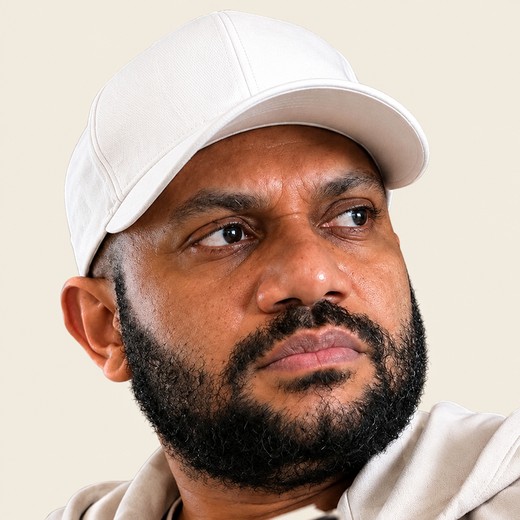
Yakobus Dumupa
Writer, organic intellectual and activist from the Land of Papua, with an educational background in political science, government and anthropology. He served as a member of the Papuan People's Assembly (2012–2016) and as Regent of Dogiyai (2017–2022), and has written dozens of books and hundreds of articles.
Read biographyReaders’ Responses