Scholarly Article
Treason and Separatist: Political Labels That Can Be Applied to Anyone
Contents
Contents
Abstrak
Kata “makar” dan “separatis” dipakai negara seolah-olah menunjuk kejahatan yang tetap dan jelas. Kajian kepustakaan ini menelusuri riwayat kedua label itu dalam sejarah Indonesia dan beberapa negara lain. Dengan teori pelabelan, gagasan peradilan politik, dan analisis sejarah perbandingan atas tokoh-tokoh dari masa kolonial sampai 2026, kajian ini menemukan dua pola yang terus berulang. Pertama, banyak orang yang pernah dicap pemberontak, makar, atau separatis kemudian diampuni, menduduki jabatan, bahkan diangkat menjadi Pahlawan Nasional, antara lain tokoh pergerakan nasional, PRRI/Permesta, DI/TII, aktivis yang dipidana subversi pada masa Orde Baru, dan Gerakan Aceh Merdeka. Kedua, orang yang semula setia kepada kekuasaan, termasuk perdana menteri, menteri, gubernur militer, perwira, calon presiden, dan mantan kepala kepolisian, dapat berubah menjadi tertuduh. Label itu tidak melekat pada perbuatan, melainkan pada posisi seseorang terhadap kekuasaan yang terus berubah. Dinamika ini lazim dalam politik dan dapat terjadi pada siapa saja, kapan saja, termasuk mereka yang hari ini memakainya. Beban terberatnya jatuh pada pihak yang paling lemah, yang labelnya paling lama melekat. Kajian ini merekomendasikan pembatasan pasal makar pada serangan nyata, mekanisme pengampunan yang setara, dan penghentian pemakaian label makar terhadap ekspresi politik damai.
Kata kunci: makar, separatisme, label politik, amnesti, peradilan politik
Abstract
The terms makar (treason) and separatis (separatist) are used by the state as if they denoted fixed and clear crimes. This library-based study traces the history of both labels in Indonesia and several other countries. Drawing on labeling theory, the concept of political justice, and comparative historical analysis of figures from the colonial era to 2026, it identifies two recurring patterns. First, many people once branded rebels, traitors, or separatists were later pardoned, appointed to office, or declared national heroes, including figures of the nationalist movement, PRRI/Permesta, Darul Islam, activists convicted of subversion under the New Order, and the Free Aceh Movement. Second, people once loyal to power, including a prime minister, ministers, a military governor, officers, a presidential candidate, and a former police chief, can become the accused. The label attaches not to the act but to a person’s shifting position toward power. Such dynamics are ordinary in politics and can happen to anyone, at any time, including those who use the label today. Its heaviest burden falls on the weakest, for whom it lasts longest. The study recommends limiting treason provisions to actual attacks, establishing equal mechanisms of clemency, and ending the use of treason labels against peaceful political expression.
Keywords: treason, separatism, political labeling, amnesty, political justice
1. Introduction
On 12 February 2025, the Minister of Home Affairs inaugurated Muzakir Manaf as Governor of Aceh in the presence of ministers, the head of state intelligence, and a former vice-president (Antara Aceh, 2025). Two decades earlier, Muzakir had been the military commander of the Free Aceh Movement (GAM), an armed movement that openly sought to separate Aceh from Indonesia. In November 2026, it was the turn of a former Chief of the Indonesian National Police, who during his tenure had led the institution enforcing treason provisions, to be investigated in a case of alleged treason (RCTI+, 2026). Almost a century earlier, in 1930, a young engineer named Soekarno had been tried by a Dutch colonial court for allegedly inciting resistance against the authorities (Hukumonline, 2013).
These three events were separated by almost a hundred years, yet shared the same common thread. The state uses the terms “treason” and “separatist” as if they denoted fixed, clear, and neutral crimes. The historical record presents a different picture. People once hunted as rebels can subsequently become ministers, governors, or National Heroes, while those once loyal to the state, even those who led its security apparatus, can later be accused of treason. These labels are assigned, transferred, and withdrawn as power changes, and this phenomenon can be found from the colonial period to the Reform era.
This study advances three propositions. First, treason and separatist are political labels that depend on a person's relationship with power, not qualities inherent in their actions. Second, the labels move in two directions: from rebel to officeholder, and from officeholder or loyal supporter to accused person. Third, because power is always changing, this dynamic is ordinary in politics and can happen to anyone, at any time, including those who currently apply these labels to others. Its heaviest burden, however, falls on the weakest, who lack the strength to have the labels removed.
Four questions follow from these propositions. Which figures were once branded rebels, traitors, or separatists and subsequently held office or received state honours? How can someone initially loyal become an accused person? Who continues to bear these labels today without a way out? Why do the labels operate in this way?
The limits of this study must be stated at the outset. It does not claim that everyone ever accused of treason was necessarily right, nor does it assess the individual guilt of the figures discussed. For living figures whose cases remain ongoing, it records only the legal status as reported and upholds the presumption of innocence. What it examines is the pattern: how the state assigns, maintains, and withdraws the labels of treason and separatism, and what this means for every citizen.
2. Theoretical Framework
2.1 Labels as products of power
Labeling theory in sociology begins with a simple observation: deviance is not a quality of an act itself, but the result of others applying rules and sanctions to the person who commits it. Howard Becker (1963) shows that powerful groups create rules, determine who violates them, and label violators as outsiders. What needs to be examined, therefore, is not only the conduct of the labeled person, but also who applies the label, when, and in whose interests.
In politics, labeling operates most sharply along the line between friend and enemy. Carl Schmitt (2007) identifies the distinction between friend and enemy as the core of the political. A political enemy need not be morally evil; it is enough to place them in the category of those threatening the existing order. Rulers can shift this line. Enemies can become friends after making peace, and friends can become enemies after a dispute. Within this framework, the movement of labels from one person to another can be understood as part of political life, rather than a deviation from it.
Boaz Ganor (2002) notes that the expression “one person's terrorist is another person's freedom fighter” is often used because such labels depend heavily on the perspective of the person applying them. The expression does not justify violence, but reminds us that the naming of political resistance is almost always determined by those currently in power.
2.2 Political justice
Otto Kirchheimer (1961) introduced the term political justice to describe the use of legal procedures for political purposes. In political justice, courts continue to operate through lawful procedures, but their function is to eliminate political opponents and brand their struggles illegitimate. Such proceedings require provisions whose wording is flexible, allowing them to be applied to anyone deemed a threat to the ruler.
This framework helps us read two things together. First, why the same provision can be used against armed actions and expressions of opinion. Second, why the routes out of that provision—amnesty, abolition of prosecution, and clemency—are also politically determined. Granting forgiveness is as political as imposing punishment.
2.3 Treason in Indonesian law
The word makar in the Indonesian Criminal Code (KUHP) translates the Dutch word aanslag in the colonial Wetboek van Strafrecht. Wulandari and Moeliono (2017) find that the terms aanslag and aanslag tot een feit have been incorrectly translated automatically as makar in various Criminal Code provisions. Aanslag means an attack. Criminal law experts therefore argue that treason provisions require an element of attack, and that someone who merely intends something without carrying out an attack cannot be charged under them (Hukumonline, 2019).
On 31 January 2018, the Constitutional Court rejected an application for judicial review of the Criminal Code's treason provisions (Constitutional Court Decision Number 7/PUU-XV/2017). On the same day, the Court also decided a similar application submitted by several citizens, some of whom were suspects in treason cases (Bisnis.com, 2018). Despite rejecting the application, the Court stressed that law enforcement authorities must exercise caution in applying treason provisions (Republika, 2018).
Since 2 January 2026, Indonesia has applied a new Criminal Code. Treason is now regulated in Articles 191 to 193 of Law Number 1 of 2023, covering treason against the president and vice-president, the territory of the state, and the government. Article 192, for example, regulates treason intended to place part or all of the state's territory under foreign control or to separate it, with penalties of death, life imprisonment, or imprisonment for up to twenty years (Law Number 1 of 2023). The law changes, but the word inherited from the colonial criminal code remains in use.
On the other hand, Indonesia is bound by the International Covenant on Civil and Political Rights through Law Number 12 of 2005 (Law Number 12 of 2005). The Covenant guarantees freedom of expression and peaceful assembly. The tension between flexible treason provisions and these guarantees of freedom provides the background to the entire discussion in this study.
3. Method
This study is library-based research using a comparative historical approach and legal analysis. Its materials comprise legislation and presidential decisions on amnesty and abolition of prosecution, court decisions, reports by national and international human rights organisations, books and scholarly articles, and credible media reporting. Data were collected up to 29 November 2026.
The figures discussed were selected using two criteria. First, the figure had at some point been officially or openly branded a rebel, traitor, subversive, or separatist by the state, whether through military operations, indictments, convictions, police reports, or officials' statements. Second, the figure subsequently underwent a recorded change in status, such as receiving amnesty, holding public office, or receiving state honours. For the reverse pattern, figures were selected who had previously held office or been within the circle of power before being branded rebels or suspected of treason. Most examples come from Indonesia, supplemented by three examples from abroad to show that this pattern is not uniquely Indonesian.
This study has limitations. Much of the information about historical figures comes from secondary sources and reporting. For cases still ongoing at the time of writing, legal status may change after publication. The study also does not aim to present a complete list of all figures, but examples sufficient to reveal the pattern.
4. From Rebels to Officeholders
This section traces the first pattern: people once branded rebels, traitors, subversives, or separatists who were later pardoned and accepted back, even honoured. Figure 1 shows the interval between a figure being labeled and being accepted back. For some, the interval was only a few years. For others, acceptance came only in the form of a heroic title after death. Table 1 at the end of this section summarises these figures' trajectories.
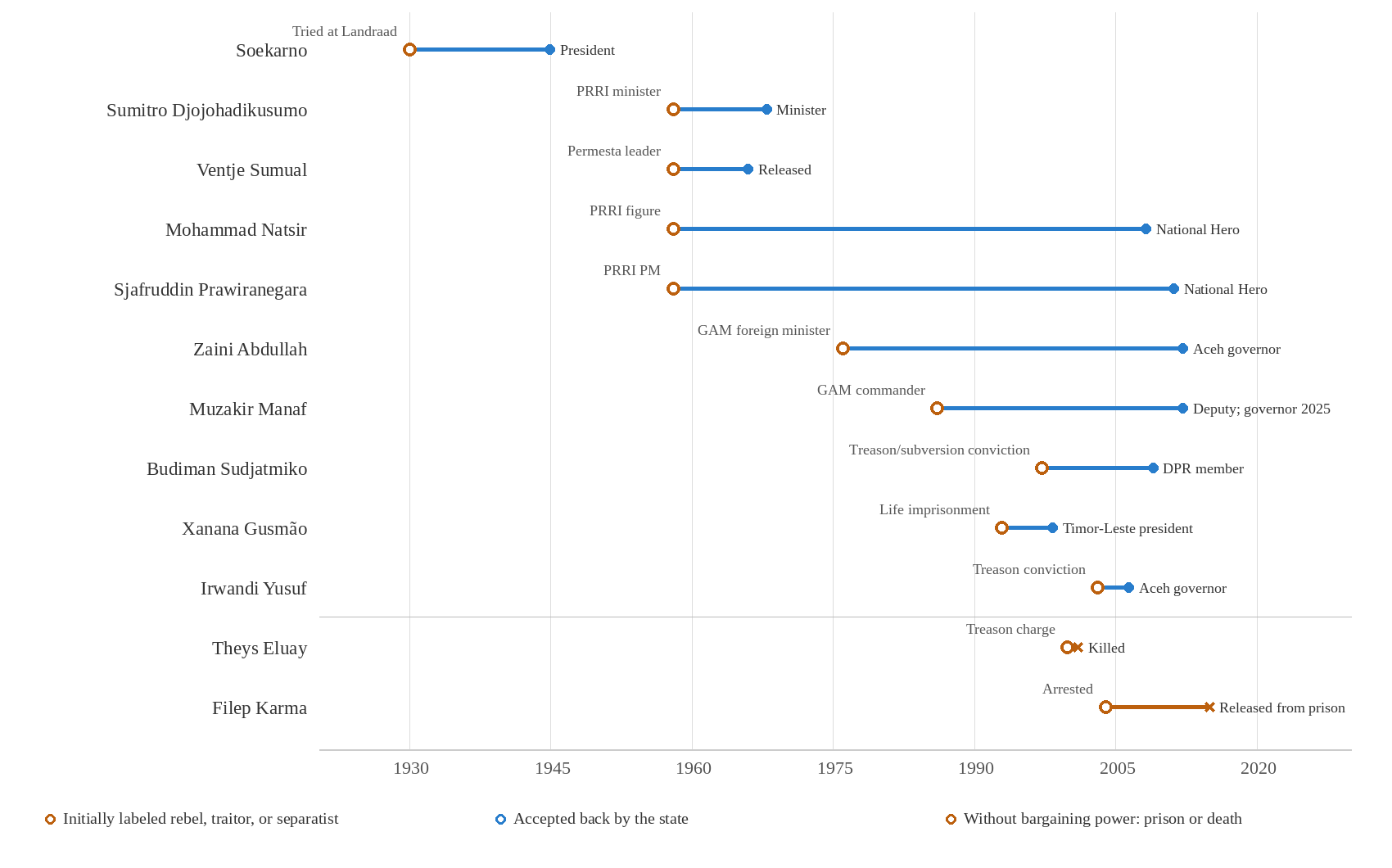
Figure 1. From being branded rebels, traitors, or separatists to being accepted back by the state, 1930–2026, compared with those without bargaining power
4.1 The nation's founders before colonial courts
This pattern had already appeared before Indonesian independence. In 1930, Soekarno and several colleagues were tried at the Landraad (colonial district court) in Bandung. Colonial prosecutors charged them under Article 169 bis and Article 153 bis of the Wetboek van Strafrecht, known as provisions against spreading hatred toward the authorities (Hukumonline, 2013). To the Dutch East Indies government, Soekarno was an agitator threatening colonial order. Fifteen years later, he proclaimed independence and became the first president.
The code used to try Soekarno was the parent of the Criminal Code the republic subsequently used to try its own citizens. Amnesty International Indonesia referred to this when noting that activists now punished under treason provisions were merely expressing political views peacefully, something the republic's founders had also done when resisting Dutch colonialism (Tempo, 2025).
4.2 PRRI and Permesta
On 15 February 1958, the Revolutionary Government of the Republic of Indonesia (PRRI) was proclaimed in West Sumatra as a rival government to the cabinet in Jakarta. The Permesta movement in Sulawesi joined two days later. The central government described PRRI and Permesta as rebel movements seeking to separate from the Unitary State of the Republic of Indonesia (Tirto.id, n.d.-a), and crushed them through military operations. The movement also received support from the United States intelligence service (Tirto.id, n.d.-b).
The PRRI cabinet was led by Sjafruddin Prawiranegara as prime minister. Sumitro Djojohadikusumo, an economist and former finance minister, was appointed PRRI's trade minister (CNBC Indonesia, 2025). He was the father of President Prabowo Subianto.
After an arrest order was issued, Sumitro remained abroad and returned only after Soeharto came to power, when he was appointed a minister (MerahPutih.com, 2023). Prabowo himself has spoken of his father's involvement in PRRI at an official forum (MerahPutih.com, 2023).
The fate of PRRI figures after the movement ended demonstrates the flexibility of the rebel label. Mohammad Natsir, a former prime minister who joined PRRI, was imprisoned without trial by Soekarno's government in 1962 and released only after the New Order came to power (Antara, n.d.). On 10 November 2008, he was awarded the title of National Hero. Many considered the delay in that title connected to his involvement in PRRI (The Jakarta Post, 2008). Sjafruddin Prawiranegara, PRRI's prime minister, received the title of National Hero on 8 November 2011 (Bisnis.com, 2011).
In Sulawesi, Permesta leader Ventje Sumual was detained after surrendering in 1961, despite a guarantee of amnesty. He was released on 26 July 1966, one day after Soeharto became Chairman of the Cabinet Presidium, and went on to become a businessman. According to Barbara Harvey, many Permesta members pursued careers in business and politics during the New Order (Tirto.id, n.d.-c). Sumual himself never regretted being called a rebel and compared Permesta with the reform movement (Tirto.id, n.d.-d).
These pardons were granted collectively through official decisions. Presidential Decision Number 322 of 1961 granted amnesty and abolition of prosecution to Permesta followers who responded to the government's call (Presidential Decision Number 322 of 1961). Presidential Decision Number 449 of 1961 subsequently granted amnesty and abolition of prosecution to people implicated in a wider range of rebellions, including Daud Beureueh's rebellion in Aceh, PRRI, and Permesta (Hukumonline, 2025).
4.3 Darul Islam
Kahar Muzakkar led the Darul Islam/Indonesian Islamic Army (DI/TII) rebellion in South Sulawesi from the early 1950s and declared the area part of the Islamic State of Indonesia in 1953 (Kompas.com, 2023). He died in a military operation in 1965. To the state, he was a rebel. To some communities in South Sulawesi, he remained a hero, and his legacy lives on in local politics (Druce, 2020).
This rebel stigma was not passed down to his descendants. His son Abdul Aziz Qahhar Mudzakkar served in the Regional Representative Council for three terms, while another son, Andi Mudzakkar, served as Regent of Luwu (Jawa Pos, 2018). This pattern parallels Sumitro's family: children of figures branded rebels do not bear the stigma and can hold high office.
4.4 Activists convicted of subversion
During the New Order, similar labels attached to students and activists. After the events of 27 July 1996, the government accused the People's Democratic Party (PRD) of masterminding the riots. Its chair, Budiman Sudjatmiko, was sentenced to thirteen years in prison on charges of treason and subversion (CNN Indonesia, 2018). After Soeharto fell, President Abdurrahman Wahid granted him amnesty on 10 December 1999, so he served only about three and a half years (Detik.com, 2023). A decade later, he became a member of the House of Representatives (DPR) for two terms, from 2009 to 2019, and led the drafting of the Village Law (Detik.com, 2023).
Budiman's story shows that the label does not apply only to armed movements or regional movements. A student who establishes a party and opposes a regime can be branded a traitor and, after the regime changes, sit in the institution that makes laws.
4.5 The Free Aceh Movement
The Free Aceh Movement is the clearest example of pardoning an armed separatist movement. The movement openly sought to separate Aceh from Indonesia, fought for almost three decades, and its conflict claimed almost 15,000 lives (Research Centre of the Indonesian House of Representatives Expertise Agency, 2016). After the 2004 tsunami, the government and GAM signed the Memorandum of Understanding in Helsinki on 15 August 2005. Two weeks later, the president issued a general amnesty and abolition of prosecution for everyone involved in GAM, both inside and outside the country (Presidential Decision Number 22 of 2005).
Afterwards, GAM leaders entered public office one by one. Irwandi Yusuf, who had been imprisoned for treason and escaped when the tsunami destroyed his prison, was elected governor in 2007 and again in 2017 (The Jakarta Post, 2019). Zaini Abdullah, GAM's former foreign minister and health minister, was elected governor in 2012 (Antara News, 2012). His deputy was Muzakir Manaf, who in the 2024 regional elections was elected governor alongside at least three other former GAM commanders elected as regional heads (CNN Indonesia, 2025).
Malik Mahmud Al-Haythar, GAM's former prime minister, was inaugurated as Aceh's Wali Nanggroe in 2013 (The Jakarta Post, 2013), an institution established under the Helsinki agreement and regulated by law. He was inaugurated again for a third term in 2023 in the presence of a former vice-president and a former minister who had once negotiated for the government (Antara, 2023). Hasan Tiro, GAM's founder who had been hunted as an enemy of the state for decades, regained Indonesian citizenship one day before his death in June 2010 (The Jakarta Post, 2010).
4.6 Former OPM leaders who changed sides
The same pattern is visible in Papua, with one condition: the person labeled a separatist must turn to support the state. Nicolaas Jouwe, one of the founders of the Free Papua Organisation (OPM), returned from exile in the Netherlands in 2009, declared that he was abandoning the struggle for independence, and was received by President Yudhoyono at his private residence in Cikeas (The Jakarta Post, 2009). Nicholas Messet, OPM's former foreign minister, met Vice-President Jusuf Kalla in 2007 to request Indonesian citizenship (Asia Pacific Solidarity Network, 2007). Together with Franzalbert Joku, he submitted a letter of surrender in Sentani in 2008 (Asia Pacific Solidarity Network, 2008). Messet later joined Indonesia's delegation to the United Nations General Assembly (Indonesia Expat, n.d.). The separatist label was no longer applied after they declared loyalty, without legal proceedings over their past.
4.7 Outside Indonesia
This pattern is not uniquely Indonesian. Xanana Gusmão, leader of the East Timorese resistance, was arrested in 1992 and sentenced to life imprisonment by an Indonesian court in May 1993 under provisions concerning rebellion and attempts to separate part of the state's territory. President Soeharto later commuted his sentence to twenty years (Amnesty International, 1997). Less than ten years later, he was inaugurated as Timor-Leste's first president (Sydney Peace Foundation, n.d.).
Nelson Mandela, leader of the resistance against apartheid, was imprisoned for 27 years, then became president of South Africa and a Nobel Peace Prize laureate. Yet his name was removed from the United States terrorism watch list only in 2008 (Al Jazeera, 2008). A label assigned by one regime can persist elsewhere long after that regime collapses.
Table 1. Figures once branded rebels, traitors, subversives, or separatists and their changing status
| Figure | Movement or accusation | Initial status | Subsequent status |
|---|---|---|---|
| Soekarno | Nationalist movement | Tried at Bandung Landraad, 1930 | First president |
| Sjafruddin Prawiranegara | PRRI | PRRI prime minister, hunted | National Hero, 2011 |
| Mohammad Natsir | PRRI | Imprisoned without trial, 1962 | National Hero, 2008 |
| Sumitro Djojohadikusumo | PRRI | PRRI minister, fugitive abroad | Minister in the New Order |
| Ventje Sumual | Permesta | Permesta leader, detained | Released in 1966, businessman |
| Kahar Muzakkar family | DI/TII | DI/TII leader, died in 1965 | Sons became a DPD member and a regent |
| Budiman Sudjatmiko | PRD | Sentenced to 13 years for treason and subversion, 1997 | Amnesty in 1999; DPR member, 2009–2019 |
| Irwandi Yusuf | GAM | Imprisoned for treason, 2003 | Governor of Aceh, 2007 and 2017 |
| Zaini Abdullah | GAM | GAM foreign minister | Governor of Aceh, 2012 |
| Muzakir Manaf | GAM | GAM military commander | Governor of Aceh, 2025 |
| Malik Mahmud | GAM | GAM prime minister | Wali Nanggroe, 2013–present |
| Nicolaas Jouwe, Nick Messet | OPM | OPM founder and foreign minister | Received by the president and vice-president; joined an Indonesian delegation |
| Xanana Gusmão | East Timorese resistance | Life imprisonment, 1993 | President of Timor-Leste, 2002 |
Source: compiled by the author from sources cited in section 4.
5. From Officeholders to Accused Persons
The second pattern moves in the opposite direction. People initially within the circle of power, even holding its highest offices, can become rebels or people accused of treason. In this pattern, what matters is not a person's position, but changes in their relationship with power.
5.1 Prime ministers, ministers, and officers who became rebels
PRRI's leaders were not outsiders. Sjafruddin Prawiranegara had led the Emergency Government of the Republic of Indonesia in 1948–1949, when the republic's leaders were held captive by the Dutch, and later became finance minister and the first central bank governor (Bisnis.com, 2011; The Jakarta Post, 2011). Mohammad Natsir was prime minister in 1950–1951 and initiated the Integral Motion that reunited Indonesia as a unitary state (RMOL, 2026). Sumitro served as minister several times before joining PRRI. Within one decade, the three shifted from leaders of the republic to rebels, then returned to being respected figures.
Daud Beureueh was an Islamic scholar and revolutionary leader in Aceh who was appointed Military Governor of Aceh, Langkat, and Tanah Karo with the honorary rank of major general (iNews, 2025). Disappointed when Aceh was merged into North Sumatra Province, he lost trust in the central government (iNews, 2025), and in 1953 became a central figure in the resistance declaring Aceh part of the Islamic State of Indonesia (Liputan6.com, 2025). In 2025, a coordinating minister supported nominating Daud Beureueh as a National Hero (iNews, 2025). Thus, the designation attached to him has shifted from governor to rebel, and may one day become hero.
Military commanders experienced the same shift. Colonel Maludin Simbolon had been commander of Territorial Army I/Bukit Barisan since 1950. On 22 December 1956, he established the Gajah Council and severed relations with the central government, then became PRRI's foreign minister (Tirto.id, n.d.-e). Alex Kawilarang had served as army commander in eastern Indonesia (Tirto.id, n.d.-f), then became one of Permesta's leaders (Inside Indonesia, 2010).
Kahar Muzakkar was originally an officer of the Army of the Republic of Indonesia with the rank of lieutenant colonel. He rebelled after being disappointed that he did not obtain the position he expected when his guerrilla unit was disbanded (Kompas.com, 2023). Ventje Sumual was a figure in the General Offensive of 1 March 1949 and an army commander in eastern Indonesia before proclaiming Permesta (Kompas.com, 2024; Tirto.id, n.d.-d). All were defenders of the republic who were later branded rebels by that same republic. Table 2 summarises officeholders and loyal supporters subsequently branded rebels, traitors, or separatists.
Table 2. Officeholders or loyal supporters subsequently branded rebels, traitors, or separatists
| Figure | Original office or position | Subsequently labeled | Year |
|---|---|---|---|
| Sjafruddin Prawiranegara | Head of PDRI, finance minister, central bank governor | PRRI prime minister | 1958 |
| Mohammad Natsir | Prime minister | PRRI figure | 1958 |
| Sumitro Djojohadikusumo | Finance minister, trade minister | PRRI minister | 1958 |
| Daud Beureueh | Military Governor of Aceh, Langkat, and Tanah Karo | Leader of DI/TII in Aceh | 1953 |
| Maludin Simbolon | Commander of TT I/Bukit Barisan | PRRI foreign minister | 1956–1958 |
| Alex Kawilarang | Army commander in eastern Indonesia | Permesta leader | 1958 |
| Kahar Muzakkar | TNI officer ranked lieutenant colonel | Leader of DI/TII in South Sulawesi | 1950–1953 |
| Ventje Sumual | Army commander in eastern Indonesia | Permesta leader | 1957 |
| Theys Eluay | DPRD member from the ruling party | Charged with separating from the state | 2000 |
| Prabowo Subianto | Party chair, presidential candidate | Named in a treason report; case did not proceed | 2019 |
| Listyo Sigit Prabowo | Chief of the Indonesian National Police | Suspect in wiretapping; alleged treason under investigation | 2026 |
Source: compiled by the author from sources cited in section 5. Ongoing cases are recorded as reported as of 17 November 2026.
5.2 Treason allegations within the circle of power
The same pattern is also visible in the Reform era. On 2 December 2016, ahead of a mass rally in Jakarta, police arrested eleven people. Eight were charged under treason provisions (Detik.com, 2016). They included retired generals, the daughter of the first president, and a former DPR member (Viva.co.id, 2016).
In May 2019, the Jakarta Metropolitan Regional Police named Prabowo Subianto, then chair of the Gerindra Party and a presidential candidate, as one of the persons reported in the treason case involving Eggi Sudjana. Gerindra denied that this meant an investigation into Prabowo had begun (CNN Indonesia, 2019). The case did not proceed against Prabowo. In 2024, he was elected president.
In early November 2026, former Chief of the Indonesian National Police Listyo Sigit Prabowo faced allegations of treason. He was named a suspect in a case of illegal wiretapping of the president. The Minister of State Secretariat considered that the wiretapping could potentially lead to a treason offence (Bisnis.com, 2026). The Criminal Investigation Agency (Bareskrim) of the Indonesian National Police (Polri) subsequently issued a police report concerning alleged treason and stated that it had sufficient preliminary evidence (RCTI+, 2026). However, as of 17 November 2026, Polri had not named a suspect in that alleged treason case (Justisio, 2026). This status must be read with the presumption of innocence. What matters to this study is not a person's guilt or innocence, but the fact that a treason allegation now touches someone who, not long before, led the institution arresting people under treason provisions.
These three events show that treason allegations are not confined to marginal groups. A presidential candidate who was later elected had once been named in a treason report, and a former police chief who enforced treason provisions during his tenure was later investigated under the same provisions. High office does not guarantee protection from such accusations.
5.3 From parliamentarian to victim
The second pattern can also end in death. Theys Hiyo Eluay had been a member of the Irian Jaya Regional House of Representatives (DPRD) for Golkar, the ruling party during the New Order, and was known to be close to the government (Human Rights Watch, 2001). In 2000, he was elected to lead the Papua Council Presidium, a forum advocating Papuan independence peacefully. In November 2000, he and four other Presidium leaders were arrested and charged with attempting to separate from the state (Amnesty International, 2001). His trial was unfinished when, on the night of 10 November 2001, Theys was abducted and killed on his way home from a Heroes' Day event at the Special Forces Command (Kopassus) headquarters in Jayapura (Human Rights Watch, 2001). A military court subsequently found seven Kopassus members guilty of assaulting Theys to death (Voice of America, 2003), with sentences ranging from two to three and a half years in prison (World Socialist Web Site, 2003).
5.4 Outside Indonesia: the case of Myanmar
Aung San Suu Kyi's story in Myanmar illustrates both directions within a single life. She spent years under house arrest by the military junta, was released in November 2010, and in April 2016 was appointed State Counsellor, a position equivalent to head of government (Freedom Now, n.d.). On 1 February 2021, the military again seized power and detained her (PEN America, n.d.). In December 2021, a special court found her guilty of incitement and sentenced her to prison (AP, 2021). Within roughly ten years, Suu Kyi's status changed from prisoner to head of government, then back to prisoner, as those controlling the state changed.
Figure 2 summarises both directions of these labels' movement and shows who remains trapped in them longest.
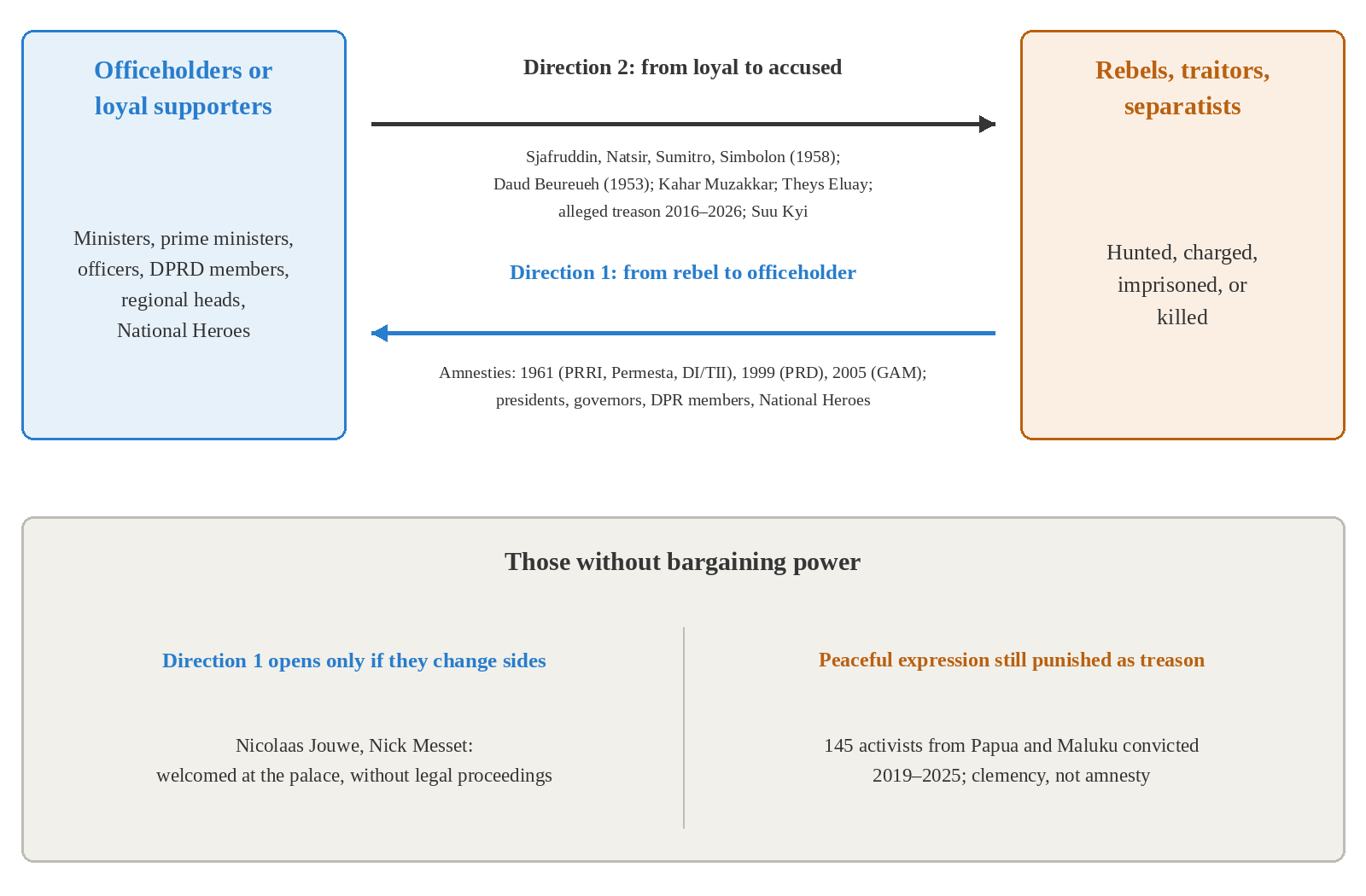
Figure 2. Treason and separatist labels move in two directions, and the people trapped in them longest
6. Those Still Entrapped
If treason and separatist labels can be removed, we must ask who still bears them without a way out. This section shows that labels remain longest on the weakest: those without weapons, bargaining power, or access to the circle of power.
6.1 Peaceful expression punished
Amnesty International Indonesia recorded 145 activists from Papua and Maluku punished for treason between January 2019 and 2025, most merely for expressing political views peacefully (Tempo, 2025). In Papua, monitors recorded at least 79 political prisoners at the end of the third quarter of 2025 (Papuans Behind Bars, 2025), including four activists in Sorong sentenced to seven months in prison for delivering a letter (Human Rights Monitor, 2025). Filep Karma, a civil servant, was sentenced to fifteen years in prison for participating in a flag-raising ceremony in Abepura in 2004 (Amnesty International, 2015). The UN Working Group on Arbitrary Detention declared his detention contrary to international law and considered the treason provisions to have been applied disproportionately (Working Group on Arbitrary Detention, 2012).
Raising a flag, demonstrating, delivering letters, and making political statements contain no element of attack as conveyed by the original meaning of aanslag. Yet these are the kinds of acts repeatedly punished under treason provisions, from Filep Karma's case in 2004 to the Sorong case in 2025.
6.2 Clemency, not amnesty
Unequal treatment is also evident in the routes out offered by the state. For PRRI, Permesta, DI/TII, PRD activists, and GAM, the state granted amnesty or general amnesty and abolition of prosecution. Amnesty removes the legal consequences of a criminal act, while abolition of prosecution ends proceedings. Recipients need not admit guilt.
For political prisoners without bargaining power, this route is rarely opened comprehensively. Amnesty for Papuan political prisoners was once granted in the early Reform era through Presidential Decision Number 123 of 1998 (Hukumonline, 2025). Since then, what is generally offered is clemency. In May 2015, President Joko Widodo granted clemency to five political prisoners in Abepura Prison (Cabinet Secretariat of the Republic of Indonesia, 2015). Clemency, however, is individually requested and requires an admission of guilt. For this reason, most political prisoners refuse to apply, including Filep Karma (Human Rights Watch, 2015).
6.3 Changing sides as a way out
For those without bargaining power, there is almost only one exit from the separatist label: turning to support the ruler, as Jouwe and Messet did. There is no peace agreement like Helsinki, no general amnesty like those of 1961, 1999, and 2005, and no route for leaders of peaceful movements to enter public office while retaining their aspirations. The Indonesian Institute of Sciences has long recommended dialogue as a means of resolving Papua's problems (Widjojo, 2009), but that recommendation has not materialised as negotiations on an equal footing.
Table 3. Those with and without bargaining power when facing treason and separatist labels
| Aspect | Those with bargaining power | Those without bargaining power |
|---|---|---|
| Examples | PRRI/Permesta, DI/TII, GAM, elites reported for treason | Peaceful activists in Papua and Maluku, political prisoners |
| Form of resistance | Often armed or within the circle of power | Mostly peaceful expression: flags, demonstrations, letters |
| Legal route out | General amnesty and abolition of prosecution, without admission of guilt; cases do not proceed | Individual clemency requiring an admission of guilt |
| Political settlement | Peace agreements, reconciliation, regime change | No negotiations on an equal footing yet |
| Subsequent fate | Ministers, governors, DPR members, Wali Nanggroe, National Heroes | Prison, and in Theys Eluay's case, death |
Source: compiled by the author from sources cited in sections 4 to 6.
7. Why These Labels Can Be Applied to Anyone
7.1 Flexible provisions
The first reason lies in the law itself. The word makar has lost its original meaning of aanslag as an attack, allowing it to be applied to intentions, plans, meetings, statements, and even flag-raising. Flexible provisions give rulers broad scope to decide who is labeled. In Kirchheimer's (1961) terms, such provisions become instruments of political justice: tools to eliminate opponents currently deemed threatening, rather than standards applied equally to everyone.
7.2 Power that continually changes
The second reason is that power never remains fixed. Regimes change, coalitions break up, friends become enemies, and enemies become friends. Because the treason label follows the friend–enemy line described by Schmitt (2007), every shift in power also shifts who is labeled. Soekarno, Sjafruddin, Natsir, Sumitro, Budiman, Xanana, and Suu Kyi all experienced this shift, some more than once.
7.3 Anyone, at any time
The third reason directly concerns every officeholder and citizen. All the examples in this study show that the transfer of treason and separatist labels is an ordinary dynamic in politics, not an exception. It occurs in the colonial period, the Old Order, the New Order, and the Reform era; in Java, Sumatra, Sulawesi, Aceh, and Papua; and in Timor-Leste, South Africa, and Myanmar. It affects independence fighters, Islamic scholars, prime ministers, ministers, governors, commanders, students, presidential candidates, and police chiefs. No office, background, or era makes someone immune to these labels. Consequently, those applying treason labels to others today cannot be certain that the labels will not turn back on them. Kahar Muzakkar and Ventje Sumual were officers who once fought to defend the republic before being branded rebels themselves. A police chief who enforced treason provisions was later investigated under the same provisions. Preventing the misuse of treason provisions is therefore not only in activists' interests, but also in officials' own interests.
7.4 The heaviest burden on the weakest
Although these labels can be applied to anyone, the manner of their removal is not equal for everyone. Those with weapons can negotiate, those with networks can wait for a regime change, and those close to power can watch their cases fail to proceed. Those with none of these bear the labels longest. Inequality results: armed resistance causing many casualties is settled through pardons, while peaceful expression causing none is punished harshly. This study does not argue that pardoning PRRI and GAM was mistaken, because those pardons brought peace. The question is why the same path is not opened to those who did not take up arms.
7.5 Responding to objections
This study must answer three possible objections. The first is that every case has a different context and therefore cannot be compared. Each case indeed has its own context. Yet the pattern emerging from these different cases shows precisely that differences in treatment are determined not by the act, but by the actor's position in relation to power at a given time.
The second objection is that pardons are granted because the actors have returned to loyalty to the state. This objection actually reinforces the study's finding. If loyalty is the measure being used, what is assessed is not conduct but attitude toward the ruler. This confirms that treason is a political label.
The third objection is that the law must be enforced. This study agrees that the law must be enforced, but equally. Harsh enforcement against one group while another group committing similar or more serious acts is pardoned is not enforcement of law, but enforcement of power. The Constitutional Court itself has reminded authorities to apply treason provisions cautiously (Republika, 2018), and the UN has declared that punishing peaceful expression violates international law (Working Group on Arbitrary Detention, 2012).
8. Conclusions and Recommendations
8.1 Conclusions
This study yields three conclusions consistent with its three opening propositions and answering its four research questions.
First, treason and separatist are political labels, not qualities inherent in acts. From Soekarno's colonial trial to the pardoning of PRRI, Permesta, DI/TII, PRD, and GAM leaders, these labels have demonstrably been assigned and removed as power changes. Many figures once branded rebels, subversives, or separatists subsequently became ministers, governors, DPR members, Wali Nanggroe, and National Heroes. The same pattern is visible in Timor-Leste and South Africa.
Second, the labels move in two directions. Rebels can become officeholders, and officeholders or loyal supporters can become accused persons. PRRI's leaders were former prime ministers, ministers, and army commanders. Daud Beureueh was a military governor. Kahar Muzakkar and Ventje Sumual were officers of the republic. Theys Eluay was a DPRD member from the ruling party. Treason allegations have even touched a presidential candidate who was later elected and a former police chief. In Myanmar, a prisoner became head of government and then a prisoner again.
Third, because the labels depend on power that continually changes, this dynamic is ordinary in politics and can happen to anyone, at any time, including those applying them today. However, the heaviest burden falls on the weakest. Those without weapons, networks, or access to power are punished for peaceful expression, offered only clemency requiring an admission of guilt, and can almost only escape the labels by turning to support the ruler.
8.2 Recommendations
Based on these conclusions, this study proposes the following five recommendations:
- Law enforcement authorities should interpret treason provisions in the new Criminal Code according to the original meaning of aanslag, an actual attack, and stop using them against peaceful political expression such as flag-raising, demonstrations, and expressions of opinion.
- The DPR and government should evaluate the wording of treason provisions in the new Criminal Code to align them with the International Covenant on Civil and Political Rights, so they cannot be used to eliminate political opponents from any side.
- The government and DPR should draft a law on amnesty and abolition of prosecution establishing clear and equal standards, so that pardons no longer depend on bargaining power or proximity to the ruler.
- The president should grant amnesty to political detainees and convicted political prisoners punished for peaceful expression, including those from Papua and Maluku, without requiring admissions of guilt, as was previously granted to PRRI, Permesta, DI/TII, PRD, and GAM.
- State officials, politicians, and the media should exercise caution when applying treason and separatist labels to political opponents or particular groups, because history shows that these labels can turn back on anyone.
Indonesian history shows that people once branded rebels can be honoured as heroes, and people currently in power can later be accused of treason. This dynamic is ordinary in politics and will continue to happen to anyone, at any time. A just law is one that remains just when power changes hands.
References
Al Jazeera. (2008, 1 Juli). US takes Mandela off “terror” list. https://www.aljazeera.com/news/2008/7/1/us-takes-mandela-off-terror-list
Amnesty International. (1997). Indonesia/East Timor: Xanana Gusmão (ASA 21/58/97). https://www.amnesty.org/fr/wp-content/uploads/2021/06/asa210581997en.pdf
Amnesty International. (2001, 12 November). Indonesia: Amnesty International condemns the killing of Papuan independence leader (ASA 21/052/2001). https://www.amnesty.org/ar/wp-content/uploads/2021/06/asa210522001en.pdf
Amnesty International. (2015, 26 Mei). Indonesia: Sepuluh tahun di balik jeruji penjara karena berekspresi secara damai (ASA 21/1722/2015). https://www.amnesty.org/en/wp-content/uploads/2021/05/ASA2117222015INDONESIAN.pdf
Antara. (2023, 15 Desember). Pengukuhan Wali Nanggroe Aceh. https://www.antaranews.com/foto/3872685/pengukuhan-wali-nanggroe-aceh
Antara. (t.t.). Menteri berkemeja tambalan. https://babel.antaranews.com/berita/156518/menteri-berkemeja-tambalan
Antara Aceh. (2025, 12 Februari). JK: Muzakir Manaf sudah menjadi panglima pembangunan untuk Aceh. https://aceh.antaranews.com/berita/378797/jk-muzakir-manaf-sudah-menjadi-panglima-pembangunan-untuk-aceh
Antara News. (2012, April). Former GAM minister elected as Aceh governor. https://en.antaranews.com/news/81430/former-gam-minister-elected-as-aceh-governor
AP. (2021, 7 Desember). A timeline of Myanmar’s Aung San Suu Kyi’s political life. EastMojo. https://eastmojo.com/neighbourhood-watch/myanmar/2021/12/07/a-timeline-of-myanmars-aung-san-suu-kyis-political-life/
Asia Pacific Solidarity Network. (2007, 20 September). Former OPM foreign minister asks to become Indonesian citizen. https://www.asia-pacific-solidarity.net/news/2007-09-20/former-opm-foreign-minister-and-asks-become-indonesian-citizen.html
Asia Pacific Solidarity Network. (2008, 25 Februari). Two senior OPM fighters surrender, vow to help develop region. https://www.asia-pacific-solidarity.net/news/2008-02-25/two-senior-opm-fighters-surrender-vow-help-develop-region.html
Becker, H. S. (1963). Outsiders: Studies in the sociology of deviance. Free Press.
Bisnis.com. (2011, 8 November). Akhirnya, Hamka dan Prawiranegara jadi Pahlawan Nasional. https://kabar24.bisnis.com/read/20111108/79/52528/akhirnya-hamka-dan-prawiranegara-jadi-pahlawan-nasional
Bisnis.com. (2018, 31 Januari). Uji materi pasal makar: Begini putusan Mahkamah Konstitusi. https://kabar24.bisnis.com/read/20180131/15/732882/uji-materi-pasal-makar-begini-putusan-mahkamah-konstitusi
Bisnis.com. (2026, 4 November). Listyo sadap Prabowo, Istana sebut ada dugaan makar. https://kabar24.bisnis.com/read/20261104/16/2018330/listyo-sadap-prabowo-istana-sebut-ada-dugaan-makar
CNBC Indonesia. (2025, 15 Februari). Keluarga Prabowo pernah pergi dari RI & hidup lama di negara lain. https://www.cnbcindonesia.com/entrepreneur/20250214113248-25-610669/keluarga-prabowo-pernah-pergi-dari-ri-hidup-lama-di-negara-lain
CNN Indonesia. (2018, 17 Mei). Cerita Budiman Sudjatmiko saat jadi “buronan” Orde Baru. https://www.cnnindonesia.com/nasional/20180517145759-20-298971/cerita-budiman-sudjatmiko-saat-jadi-buronan-orde-baru
CNN Indonesia. (2019, 21 Mei). Prabowo diduga terlibat makar bersama Eggi Sudjana. https://www.cnnindonesia.com/nasional/20190521045822-12-396694/prabowo-dilaporkan-jadi-tersangka-makar/
CNN Indonesia. (2025, 20 Februari). Daftar eks panglima GAM yang ikut retret kepala daerah di Akmil. https://cnnindonesia.com/nasional/20250220081100-32-1200319/daftar-eks-panglima-gam-yang-ikut-retret-kepala-daerah-di-akmil
Detik.com. (2016, 3 Desember). Ini penjelasan polisi soal aksi 11 orang yang ditangkap. https://news.detik.com/berita/d-3361696/ini-penjelasan-polisi-soal-aksi-11-orang-yang-ditangkap
Detik.com. (2023, Agustus). Terancam dipecat, begini rekam jejak Budiman Sudjatmiko di PDIP. https://news.detik.com/pemilu/d-6886095/terancam-dipecat-begini-rekam-jejak-budiman-sudjatmiko-di-pdip
Druce, S. C. (2020). A South Sulawesi hero and villain: Qahhar Mudzakkar (Kahar Muzakkar) and his legacy. International Journal of Asia Pacific Studies, 16(2), 151–179. https://ijaps.usm.my/wp-content/uploads/2020/07/IJAPS162_Art8_Dami.pdf
Freedom Now. (t.t.). Aung San Suu Kyi. https://www.freedom-now.org/cases/aung-san-suu-kyi
Ganor, B. (2002). Defining terrorism: Is one man’s terrorist another man’s freedom fighter? Police Practice and Research, 3(4), 287–304. https://doi.org/10.1080/1561426022000032060
Hukumonline. (2013, Januari). Jejak pledoi fenomenal Bung Karno. https://www.hukumonline.com/berita/a/jejak-pledoi-fenomenal-bung-karno-lt50ebec952d9a6/
Hukumonline. (2019, Mei). Ada kekeliruan pemahaman tentang makar. https://www.hukumonline.com/berita/a/ada-kekeliruan-pemahaman-tentang-makar-lt5cdcd93351aa6/
Hukumonline. (2025, Agustus). Hak prerogatif presiden: Menghapus jerat hukum melalui abolisi dan amnesti. https://www.hukumonline.com/berita/a/hak-prerogatif-presiden--menghapus-jerat-hukum-melalui-abolisi-dan-amnesti-lt68a57a874868c
Human Rights Monitor. (2025, November). Four political prisoners in Sorong found guilty of treason and sentenced to seven months in prison for delivering letters. https://humanrightsmonitor.org/news/four-political-prisoners-in-sorong-found-guilty-of-treason-and-sentenced-to-seven-months-in-prison-for-delivering-letters/
Human Rights Watch. (2001, 11 November). Indonesia: Papuan leader’s murder must be investigated. https://hrw.org/english/docs/2001/11/11/indone3347.htm
Human Rights Watch. (2015, 9 Juli). Indonesia: Grasi untuk lima narapidana Papua abaikan puluhan lainnya. https://www.hrw.org/id/news/2015/07/09/279100
Indonesia Expat. (t.t.). Benny Wenda not allowed to enter UN assembly hall. https://indonesiaexpat.biz/featured/benny-wenda-not-allowed-to-enter-un-assembly-hall/
iNews. (2025, 11 Juli). Yusril dukung Daud Beureueh jadi pahlawan nasional, bukan pemberontak. https://www.inews.id/news/nasional/yusril-dukung-daud-beureueh-jadi-pahlawan-nasional-bukan-pemberontak/all
Inside Indonesia. (2010). Remembering Permesta. https://www.insideindonesia.org/archive/articles/remembering-permesta
Jawa Pos. (2018). Dua putra Kahar Muzakkar yang berhadapan dalam pilgub Sulawesi Selatan. https://jawapos.com/features/1801110046/dua-putra-kahar-muzakkar-yang-berhadapan-dalam-pilgub-sulawesi-selatan
Justisio. (2026, 17 November). Kapolri pastikan Listyo Sigit cs belum tersangka dugaan makar. https://justisio.com/berita/2026-11-17-kapolri-pastikan-listyo-sigit-cs-belum-tersangka-dugaan-makar
Kirchheimer, O. (1961). Political justice: The use of legal procedure for political ends. Princeton University Press.
Kompas.com. (2023, 11 Oktober). Pemberontakan DI/TII Sulawesi Selatan. https://www.kompas.com/stori/read/2023/10/11/110000179/pemberontakan-di-tii-sulawesi-selatan
Kompas.com. (2024, 30 September). Ventje Sumual, tokoh Serangan Umum 1 Maret dan Permesta. https://www.kompas.com/stori/read/2024/09/30/220000579/ventje-sumual-tokoh-serangan-umum-1-maret-dan-permesta
Liputan6.com. (2025). Aceh ternyata pernah deklarasikan Negara Islam Indonesia. https://www.liputan6.com/regional/read/5996818/aceh-ternyata-pernah-deklarasikan-negara-islam-indonesia
MerahPutih.com. (2023, 14 Juli). Prabowo bicara soal PRRI di forum Apeksi, gerakan pemberontakan yang didukung ayahnya. https://www.merahputih.com/post/read/prabowo-bicara-soal-prri-di-forum-apeksi-gerakan-pemberontakan-yang-didukung-ayahnya
Papuans Behind Bars. (2025). Laporan triwulan III 2025. https://papuansbehindbars.org/wp-content/uploads/2025/10/PBB-Q3-2025-ID-2.pdf
PEN America. (t.t.). Aung San Suu Kyi. https://pen.org/?p=128800
Pusat Penelitian Badan Keahlian DPR RI. (2016). Pemberian amnesti terhadap kelompok Din Minimi (Info Singkat Vol. VIII No. 1). https://berkas.dpr.go.id/pusaka/files/info_singkat/Info%20Singkat-VIII-1-I-P3DI-Januari-2016-72.pdf
RCTI+. (2026, 12 November). Bareskrim temukan bukti awal dugaan makar terkait kasus penyadapan presiden. https://rctiplus.com/news/detail/nasional/5515210/bareskrim-temukan-bukti-awal-dugaan-makar-terkait-kasus-penyadapan-presiden
Republika. (2018, 31 Januari). MK tolak uji materi pasal makar. https://news.republika.co.id/berita/p3f40w354/mk-tolak-uji-materi-pasal-makar
RMOL. (2026, 14 Agustus). Mohammad Natsir sang pemersatu. https://rmol.id/publika/read/2026/08/14/718183/mohammad-natsir-sang-pemersatu
Schmitt, C. (2007). The concept of the political (G. Schwab, Penerj.; Edisi diperluas). University of Chicago Press. (Karya asli terbit 1932)
Sekretariat Kabinet Republik Indonesia. (2015, 10 Mei). Kunjungi Lapas Abepura, Presiden Jokowi bebaskan 5 tahanan politik Papua. https://setkab.go.id/kunjungi-lapas-abepura-presiden-jokowi-bebaskan-5-tahanan-politik-papua/
Sydney Peace Foundation. (t.t.). Xanana Gusmão. https://sydneypeacefoundation.org.au/?p=78
Tempo. (2025, Agustus). Amnesty Internasional: Ratusan warga Papua dan Maluku dikriminalisasi dengan pasal makar. https://www.tempo.co/hukum/amnesty-internasional-ratusan-warga-papua-dan-maluku-dikriminalisasi-dengan-pasal-makar-2059393
The Jakarta Post. (2008, 15 Desember). Islam must be a blessing, solution: SBY. https://www.thejakartapost.com/news/2008/12/15/islam-must-be-a-blessing-solution-sby
The Jakarta Post. (2009, 27 Maret). OPM founder meets SBY, seeks RI citizenship. https://www.thejakartapost.com/news/2009/03/27/opm-founder-meets-sby-seeks-ri-citizenship
The Jakarta Post. (2010, 4 Juni). Hasan di Tiro: The end of an era in Aceh. https://www.thejakartapost.com/news/2010/06/04/hasan-di-tiro-the-end-era-aceh
The Jakarta Post. (2011, 9 November). Govt gives posthumous honor to heroes. https://www.thejakartapost.com/news/2011/11/09/govt-gives-posthumous-honor-heroes
The Jakarta Post. (2013, 17 Desember). Aceh installs former rebel leader as wali nanggroe. https://www.thejakartapost.com/news/2013/12/17/aceh-installs-former-rebel-leader-wali-nanggroe
The Jakarta Post. (2019, 9 April). Irwandi Yusuf, ex-Aceh rebel who became governor, jailed for corruption. https://www.thejakartapost.com/news/2019/04/09/irwandi-yusuf-ex-aceh-rebel-who-became-governor-jailed-for-corruption
Tirto.id. (t.t.-a). Buronan negara penyelamat negeri. https://tirto.id/buronan-negara-penyelamat-negeri-cnE3
Tirto.id. (t.t.-b). Peran CIA di balik pemberontakan Sumatera dan Sulawesi. https://tirto.id/peran-cia-di-balik-pemberontakan-sumatera-dan-sulawesi-ck6Z
Tirto.id. (t.t.-c). Nasib mujur mantan Permesta di bawah Orde Baru. https://tirto.id/nasib-mujur-mantan-permesta-di-bawah-orde-baru-ck68
Tirto.id. (t.t.-d). Permesta, pemberontakan atau bukan? https://tirto.id/permesta-pemberontakan-atau-bukan-didQ
Tirto.id. (t.t.-e). Sejarah PRRI: Para kolonel pembangkang menentang Jakarta. https://tirto.id/sejarah-prri-para-kolonel-pembangkang-menentang-jakarta-cBT8
Tirto.id. (t.t.-f). Sekutu dan seteru Kahar Muzakkar. https://tirto.id/sekutu-dan-seteru-kahar-muzakkar-cuzT
Viva.co.id. (2016, Desember). Melawan tuduhan makar. https://www.viva.co.id/ragam/fokus/857494-melawan-tuduhan-makar
Voice of America. (2003, 21 April). 7 sentenced in Indonesia in 2001 murder of Papuan independence leader. https://www.voanews.com/a/a-13-a-2003-04-21-24-7-66848872/375706.html
Widjojo, M. S. (Ed.). (2009). Papua road map: Negotiating the past, improving the present and securing the future. Yayasan Obor Indonesia, LIPI, dan TIFA.
Working Group on Arbitrary Detention. (2012). Opinion No. 48/2011 (Indonesia): Filep Jacob Semuel Karma (A/HRC/WGAD/2011/48). Perserikatan Bangsa-Bangsa. https://hrlibrary.umn.edu/wgad/48-2011.html
World Socialist Web Site. (2003, 29 April). Indonesian military court hands out light sentences for murder of Papuan leader. https://www.wsws.org/en/articles/2003/04/papu-a29.html
Wulandari, W., & Moeliono, T. P. (2017). Problematika pengertian aanslag-aanslag tot een feit: Perbandingan makar dalam KUHP, WvSNI dan Sr. Padjadjaran Jurnal Ilmu Hukum, 4(3). https://doi.org/10.22304/pjih.v4n3.a3
Keputusan Presiden Nomor 22 Tahun 2005 tentang Pemberian Amnesti Umum dan Abolisi kepada Setiap Orang yang Terlibat dalam Gerakan Aceh Merdeka. https://peraturan.go.id/files/kp22-2005.pdf
Keputusan Presiden Nomor 322 Tahun 1961 tentang Pemberian Amnesti dan Abolisi kepada Para Pengikut Gerakan Permesta. https://peraturan.bpk.go.id/Details/161859
Putusan Mahkamah Konstitusi Nomor 7/PUU-XV/2017 tentang Pengujian Kitab Undang-Undang Hukum Pidana terhadap Undang-Undang Dasar Negara Republik Indonesia Tahun 1945. https://pasal.id/peraturan/putusan-mk/puu-mk-7-2017
Undang-Undang Nomor 1 Tahun 2023 tentang Kitab Undang-Undang Hukum Pidana. https://peraturan.bpk.go.id/Details/234935/uu-no-1-tahun-2023
Undang-Undang Nomor 12 Tahun 2005 tentang Pengesahan International Covenant on Civil and Political Rights (Kovenan Internasional tentang Hak-Hak Sipil dan Politik).
How to cite
Dumupa, Y. (2026). Treason and separatist: Political labels that can be applied to anyone [Scholarly article]. Yakobus Dumupa. https://yakobusdumupa.com/kajian/makar-dan-separatis?lang=en
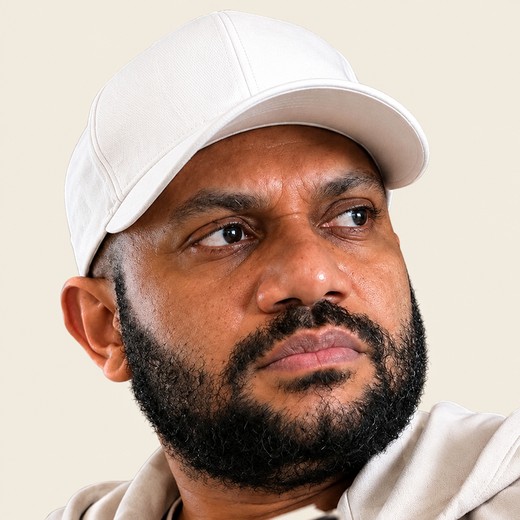
About the Author
Yakobus Dumupa
Writer, organic intellectual and activist from the Land of Papua, with an educational background in political science, government and anthropology. He served as a member of the Papuan People's Assembly (2012–2016) and as Regent of Dogiyai (2017–2022), and has written dozens of books and hundreds of articles.
Read biography