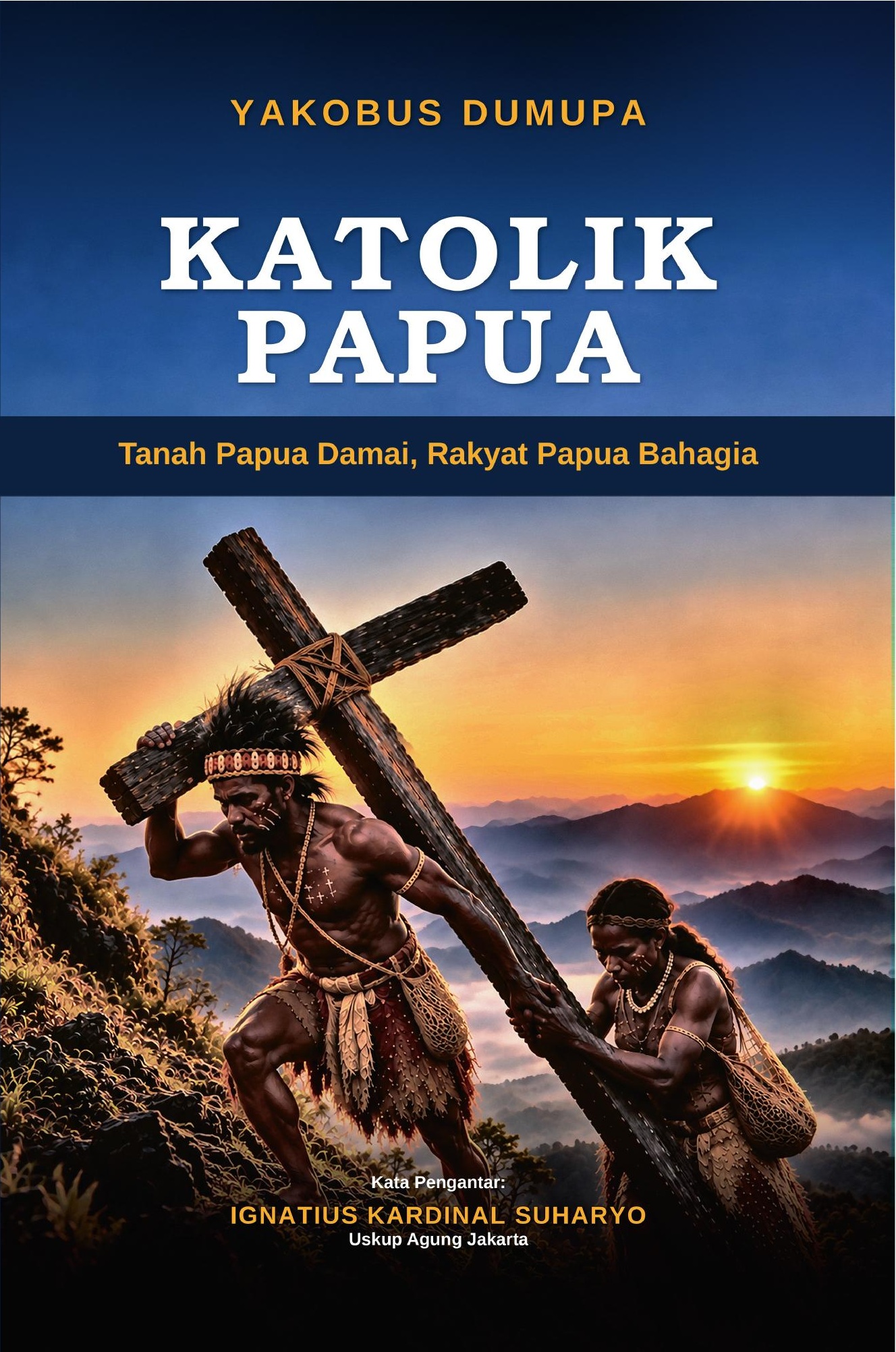
In many villages across the Land of Papua, the Catholic Church arrived through schools, clinics and pastoral care long before the state did. The deep trust people place in the Church raises a fundamental question: what is demanded of an institution so trusted, when the people face poverty, loss of land, violence and displacement?
Yakobus Dumupa sets out the stance that runs through the whole book: the Church must be impartial — never the tool of any party, government, company or faction — yet it may never be neutral in the face of human suffering. Drawing on Scripture, Catholic social teaching, official documents and traceable sources, the book examines the history of Catholic ministry, questions of development and human rights, ecology, and the survival of Indigenous Papuans.
Its scope extends to spirituality, inculturation, the role of the laity, interfaith dialogue and reconciliation. The Church itself is also scrutinised, especially in its handling of money, land and power. Written as a work of popular scholarship with a foreword by Ignatius Cardinal Suharyo, the book invites readers to consider concrete steps toward a peaceful Papua and a happy Papuan people.